Key Parameters Required for Cooling Tower Selection
Cooling tower selection cannot be based on water flow alone. Suppliers require clear operating conditions to recommend a properly sized model. The main parameters to be provided are listed below.
Water Flow and Temperatures Circulating water flow is the fundamental parameter. Inlet water temperature and outlet water temperature (i.e., the required temperature drop) must also be specified. The temperature difference directly determines the heat exchange area and tower size for selection.
Wet-Bulb Temperature The local summer wet-bulb temperature is a critical basis for selection, as it defines the theoretical cooling limit of the cooling tower. Without this data, the tower is often undersized and fails to achieve the target water temperature in summer. The extreme summer wet-bulb temperature at the project site is recommended, rather than the average value.
Site Conditions Installation location (rooftop or ground), available footprint, ventilation conditions, and surrounding obstructions all affect tower type selection and layout design.
Noise Requirements Clear noise limits are necessary for installations near residential areas, office buildings or hospitals. Low-noise models or additional silencing accessories may be required for stringent noise standards.
Water Quality Conditions Circulating water quality, scaling tendency and the presence of corrosive media influence material selection and the choice between open-type and closed-type towers. Closed cooling towers are preferred for applications with strict water quality requirements.
Tower Structure Type Confirm whether an open or closed tower is required, and counterflow or crossflow configuration. Each design differs in footprint, maintenance needs and applicable scenarios, and shall be selected according to site conditions.
In summary, a complete set of parameters delivers a more suitable solution. Wet-bulb temperature is most frequently overlooked, which is a leading cause of undersized cooling towers. Water flow, inlet/outlet temperatures, wet-bulb temperature and site conditions are considered mandatory information, with additional requirements supplemented based on project specifics.
Information
New Product
DB-HORSEPOWER BHL-H series clos
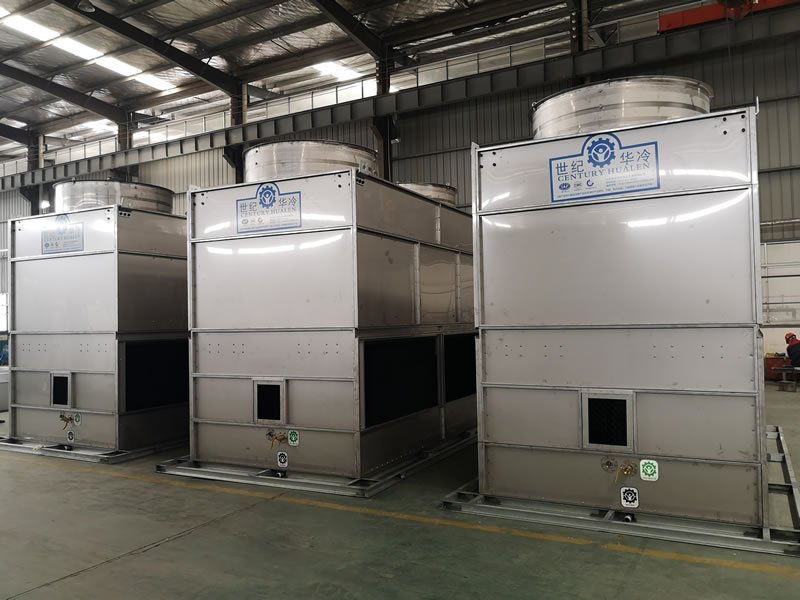
- Made in china - Jiangsu Century Hualeng Industrial Development Co., LTD Foc
cooling tower
Magnesium aluminum zinc steel-
DB-HORSEPOWER GTX-H series of h
Tonghan Mali GTX-N series high
DB-HORSEPOWER-GFNL Industrial
Ranking
- Counterflow vs Crossflow Cooling Towers: How to Choo
- Key Parameters Required for Cooling Tower Selection
- How should stainless steel cooling tower manufacture
- How to do a good job in cleaning fiberglass cooling
- How to reduce the noise during the operation of indu