
Counterflow vs Crossflow Cooling Towers: How to Choose?
Counterflow and crossflow cooling towers do not have absolute advantages or disadvantages. The selection depends heavily on site operating conditions. Given the different directions of airflow and water flow, they feature distinct performance characteristics.
Features of Counterflow Cooling Towers
Air flows upward while water falls downward, creating countercurrent contact between air and water. This delivers superior heat transfer efficiency and a smaller footprint for the same cooling duty. Counterflow towers are suitable for industrial projects and applications requiring a large temperature drop, such as chemical plants, power facilities and manufacturing workshops. Their drawbacks include the fan mounted at the top of the tower, relatively prominent falling water noise, and less convenient access for fill maintenance compared with crossflow models.
Features of Crossflow Cooling Towers
Air passes horizontally through the fill as water falls vertically, forming cross-contact between air and water. The fill is partially exposed, enabling easy inspection, maintenance and cleaning. Fans generally run at lower speeds for better noise performance. Crossflow towers are widely used for central air conditioning systems, commercial buildings, hospitals and other noise-sensitive locations. On the downside, they require a larger footprint for the same cooling capacity and offer slightly lower heat transfer efficiency than counterflow towers.
Selection Guidelines
Start with site space: choose a counterflow tower when space is limited. Next, check noise requirements: crossflow towers are preferred for installations near residential or office areas. Finally, evaluate the temperature drop requirement: counterflow towers are better suited for heavy-duty industrial cooling with a large temperature difference between inlet and outlet water.
Clearly communicate the site constraints, noise limits and required temperature drop during selection, so suppliers can provide proper recommendations. Avoid making decisions based solely on price or past preference; the most reliable choice comes from matching equipment to actual operating conditions.
New Product
DB-HORSEPOWER BHL-H series clos
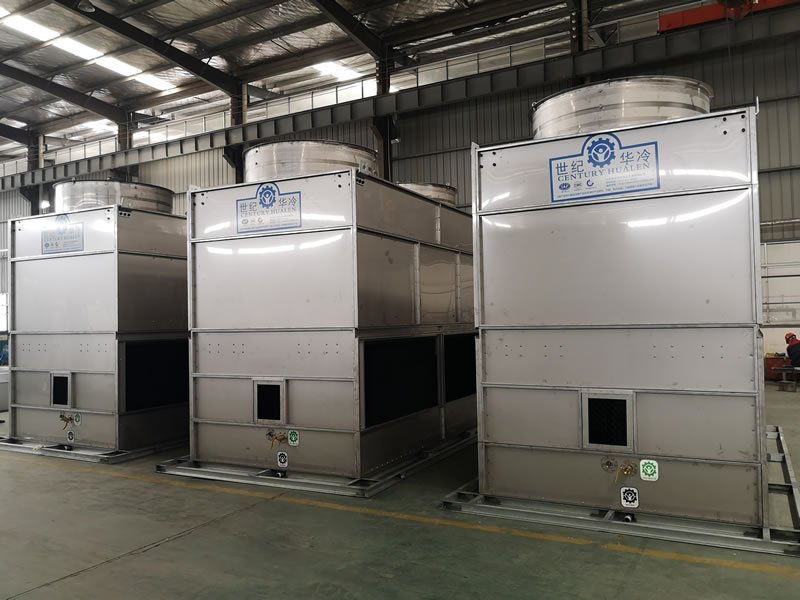
- Made in china - Jiangsu Century Hualeng Industrial Development Co., LTD Foc
cooling tower
Magnesium aluminum zinc steel-
DB-HORSEPOWER GTX-H series of h
Tonghan Mali GTX-N series high
DB-HORSEPOWER-GFNL Industrial
Ranking
- What Are the Differences Between Closed-Circuit and
- Counterflow vs Crossflow Cooling Towers: How to Choo
- Key Parameters Required for Cooling Tower Selection
- How should stainless steel cooling tower manufacture
- How to do a good job in cleaning fiberglass cooling
- How to reduce the noise during the operation of indu